01
Automate
Workflow agents, internal tools, chat and voice support, data cleanup — anything the team currently does by hand at 11pm. We map the process first, then build only what removes real work.
- Make.com
- n8n
- Zapier
- GoHighLevel
- OpenAI
Automate
Build
Sell
Reach
Return
We build the systems behind growing businesses — automation, websites, online stores, social and email — then connect them, so your tools talk to each other and your team stops repeating the same job by hand.
Six tools, four spreadsheets, one very tired ops person
One system — synced
Voice agent response time, down from 14 seconds. Long enough to feel like a person, short enough that nobody hangs up.
Industry verticals running live AI phone agents, each with its own knowledge base.
Duplicate invoices since we rebuilt the billing pipeline. Previously a weekly cleanup job.
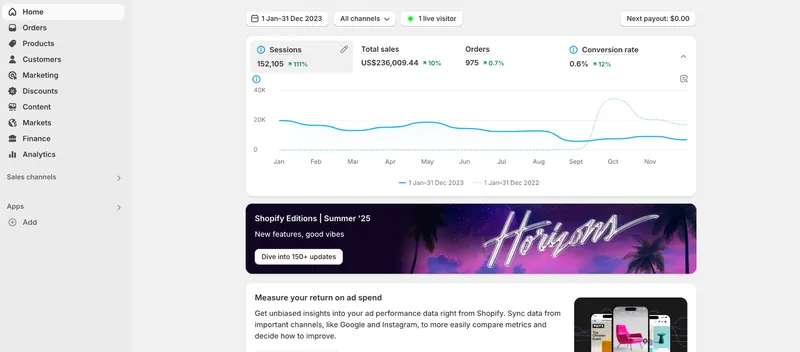
Annual sales on the Shopify store we manage day to day, held steady across the year.
The offer
Most businesses don't need more software. They need the software they already pay for to stop working in isolation.
Before
After
What connected actually means
This is a real shape of build, running continuously. A customer checks out, and the rest happens without anyone opening a tab.
Order placed
Shopify
Invoice created
Stripe
Payment captured
Stripe
Record filed
Airtable
Receipt sent
Klaviyo
Team notified
Slack
Elapsed: about four seconds · Human keystrokes: none
What we do
Sold separately, run together. Most clients start with one and add the next when the first one pays for itself.
01
Workflow agents, internal tools, chat and voice support, data cleanup — anything the team currently does by hand at 11pm. We map the process first, then build only what removes real work.
02
Websites on Shopify, WordPress, Wix, Squarespace, GoDaddy, or coded from scratch. The platform gets chosen for your budget and who has to update the thing on a Tuesday — not for our preference.
03
Storefronts, product pages, checkout, paid campaigns, and the conversion work that makes the traffic worth buying. Including Amazon listings, where the rules are their own sport.
04
Calendars, content, publishing and community, on the channels that actually suit the business. We'd rather run two channels properly than five badly.
05
Lists, flows, campaigns and lifecycle sequences that bring buyers back without discounting every time. Abandoned carts, post-purchase, win-back, the ones that pay rent.
Selected work
Three of the builds we're most often asked about. The full list, including what broke and how we fixed it, is on the work page.
SmartCallz — Voice AI
We engineered and debugged three named agents across nine industry verticals, each with its own knowledge base structured for retrieval. Responses were taking 14 seconds, which on a phone call is a hang-up. Moving the architecture off the Assistants API onto Chat Completion brought it to two.
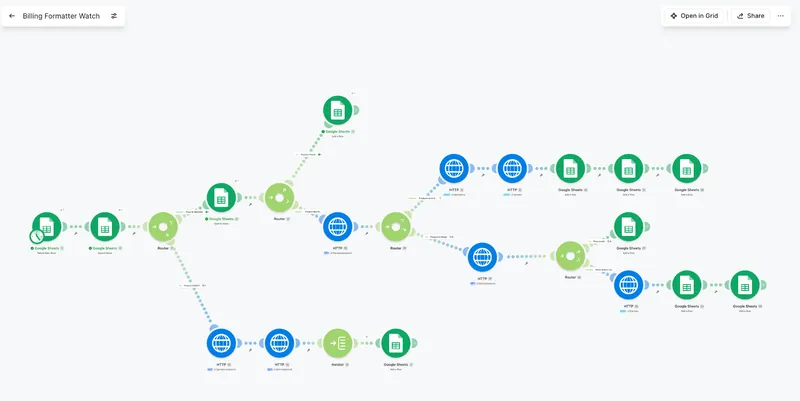
Wright Source Group — Billing
The original setup broke under real conditions: mismatched field types, a Stripe search API that wouldn't reliably match existing products, and duplicate records on every repeat run. We rebuilt the scenario architecture and combined product and price creation into a single atomic call, so each line resolves to one correct Stripe object even when triggers overlap.
Official Athena — Shopify
We run the storefront day to day: product listings, store structure, and the conversion work that keeps the numbers steady. The point was to sustain six figures across the year rather than spike at Christmas and go quiet in March.
How it goes
The order matters. Most failed automations get built before anyone watched the process they were meant to replace.
Step 01 — Audit
A free 30-minute call where you walk us through the job that annoys you most. We come back with what's automatable, what isn't, and what it's worth.
Step 02 — Map
Every trigger, every branch, every thing that could go wrong at 2am. You approve the map. No surprises on the invoice.
Step 03 — Build
We build it, then try to break it — duplicate triggers, bad data, half-filled forms. The edge cases are the job.
Step 04 — Run
Handover with documentation, or we run and monitor it for you. Automations drift when APIs change. Someone should be watching.
Thirty minutes on the job your team does twice. You get a written answer on what's worth automating and what isn't — whether or not you hire us.